Bästa Prompt Token Estimator För Digitala Kreatörer I Stockholm

By VANTIX Editorial Team Reviewed on 2026-07-24 Sources: 5 verified citations

Navigating the Economics of Large Language Models in the Nordic Tech Capital

Prompt Token Estimator in Stockholm, Sweden

In the rapidly evolving digital area of Stockholm, Sweden, the integration of Large Language Models (LLMs) into enterprise workflows has become a cornerstone of competitive advantage. As businesses across the city—from the busy tech corridors of Kista to the creative hubs in Södermalm—adopt generative AI, the necessity for precise cost management has never been greater. The Prompt Token Estimator serves as a critical utility for developers, data scientists, and digital creators to forecast the financial implications of their API usage. By calculating the exact number of tokens consumed by input prompts and output completions, this tool allows for granular budget control in a market where operational efficiency is paramount.

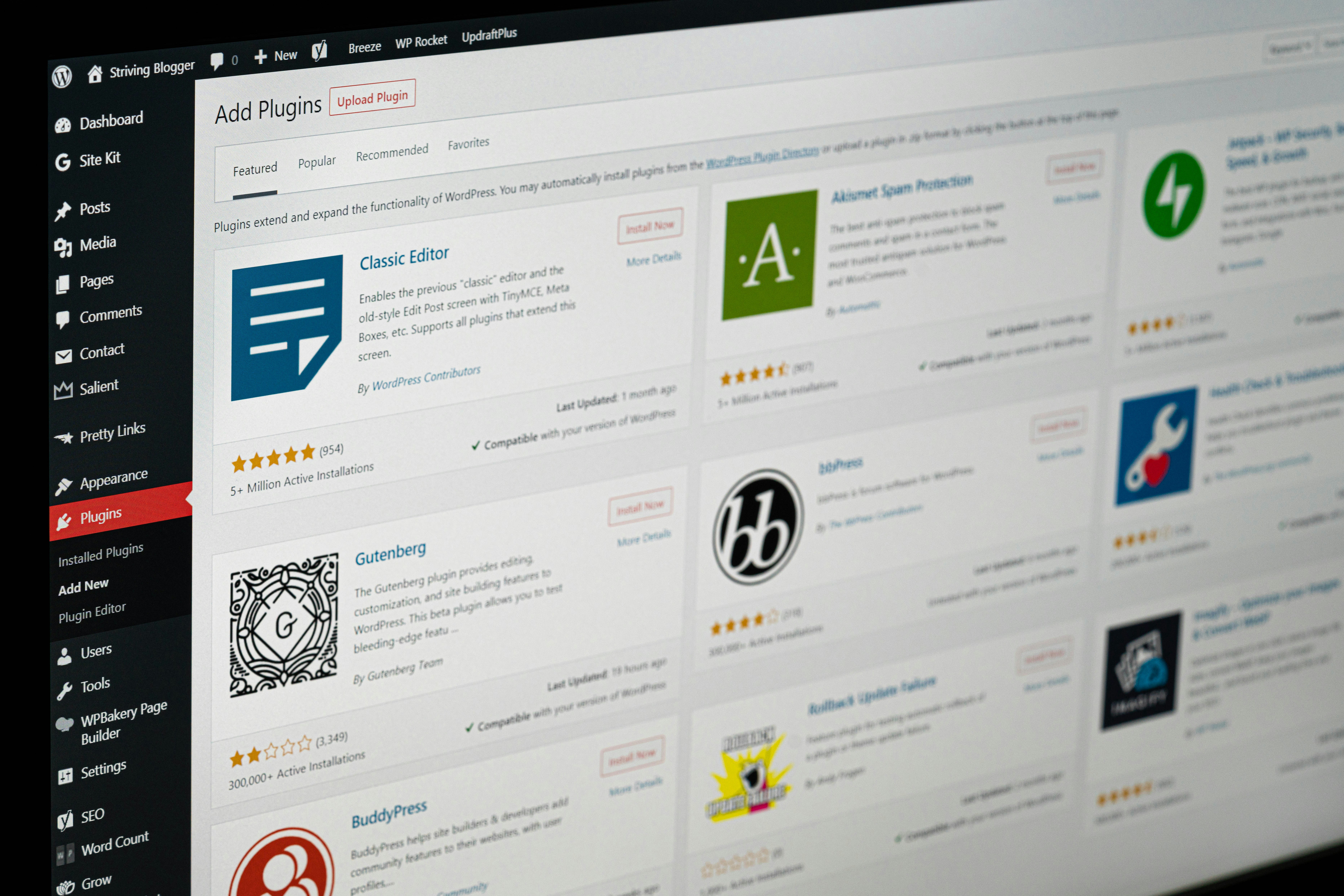
Stockholm, Sweden blogger digitalcreator using prompt token estimator

For a Stockholm-based startup or a multinational corporation, understanding the Prompt Token Estimator is not merely a technical requirement but a fiscal necessity. Because LLM providers charge based on token volume, failing to estimate these costs can lead to significant budgetary overruns. In the Swedish market, where transparency and financial planning are deeply ingrained in business culture, this tool provides the predictability required for sustainable growth. additionally, as organizations navigate the complexities of GDPR compliance, the estimator helps in auditing data flows, ensuring that the volume of processed information remains within the scope of data protection mandates enforced by local authorities.

However, users often encounter pitfalls when implementing these tools. First, many fail to account for the variance in tokenization logic between different models, leading to inaccurate projections. Second, developers often overlook the impact of system prompts, which consume tokens with every API call. Third, there is a common failure to integrate the estimator into the CI/CD pipeline, resulting in manual, error-prone calculations. Fourth, users frequently ignore the currency conversion risks when billing is denominated in USD while internal accounting is conducted in Swedish Krona. Finally, a lack of consideration for caching mechanisms can lead to over-estimation, as repeated prompts may not always incur full costs. By mastering the Prompt Token Estimator, Stockholm professionals can mitigate these risks, ensuring that their AI initiatives remain both innovative and economically viable within the stringent regulatory environment of Sweden.

Prompt Token Length & Cost Estimator

Instantly estimate token length, context-window usage, and API billing costs for any LLM prompt.

🔒 100% private — no model calls, no data storage. Your prompt never leaves your browser.

Prompt Input

API Pricing & Model Configuration

Estimation Results Standard Length

Tokens (Input) 0
Cost (Single Run) $0.0000
Monthly Volume Cost $0.00
Context Window Used 0%

* Based on Vantix Base Token Standard (1 token ≈ 4 chars)

Why Every AI Builder Needs a Prompt Token Estimator

In the rapidly accelerating landscape of artificial intelligence development, prompt engineering has evolved from a niche skill into a fundamental architectural requirement. However, a critical blind spot remains for many developers, founders, and automation specialists: budget awareness. AI builders frequently focus on output quality and model performance first, completely ignoring the token cost associated with their context windows. That is entirely understandable in the early prototyping stage. A prompt works, the agentic workflow feels promising, and the project advances to production.

The problem inevitably arrives later when these workflows scale. System prompts become longer, few-shot examples multiply, and context windows become crowded with RAG (Retrieval-Augmented Generation) payloads. Before long, API usage costs and latency creep upward at an alarming rate. At that exact point, teams realize they shipped complex prompt logic without implementing any simple billing or budgeting layer. Our prompt token estimator is specifically engineered to fix that exact structural blind spot in your AI architecture.

Understanding the Mechanics of an LLM Token Calculator

A surprisingly large percentage of AI pipelines are financially inefficient. This inefficiency is rarely because the underlying models—such as GPT-4o, Claude 3.5 Sonnet, or Gemini 1.5 Pro—are inherently flawed or overpriced. Instead, the inefficiency stems directly from bloated prompt layers. System instructions often repeat themselves unnecessarily. Context blocks contain massive amounts of irrelevant background data. Datasets and CSVs are pasted directly into prompts without proper markdown cleanup.

The cascading result of this prompt sprawl is not just a ballooning monthly bill. It severely impacts your application's speed, reasoning clarity, and long-term maintainability. A serious enterprise AI workflow benefits from rigorous token awareness in the exact same way that a serious finance workflow benefits from strict expense auditing. Using an LLM token calculator allows you to forecast these expenses before you ever deploy the code.

100% Private Token Calculator for AI Prompts

The positioning of TheVantix Prompt Token Length & Cost Estimator centers on one uncompromising feature: absolute data privacy. The privacy angle is unusually critical for this specific utility. We understand that enterprise builders, compliance officers, and prompt engineers absolutely cannot afford to paste proprietary internal prompts, highly guarded workflows, or sensitive client-facing instructions into a random third-party aggregator site that silently transmits their text to an external server.

That is where our architecture stands completely apart from the competition. This private token calculator for AI prompts operates entirely locally within your browser. There are zero backend API calls required to calculate your tokens. We do not transmit your text to OpenAI, Anthropic, or any server. Your proprietary data is never logged, stored, or analyzed. For serious AI teams and security-conscious founders, this zero-trust architecture is not just a nice bonus—it is the deciding factor for adoption.

Compare Prompt Versions for Token Cost Reduction

This tool is fundamentally designed to be much more than a passive billing calculator; it is an active design discipline utility. Once engineering teams can clearly visualize token weight and its immediate financial impact, human behavior changes. Developers begin writing cleaner instructions, aggressively trimming repetitive context, and structuring their payloads far more intentionally.

To facilitate this discipline, we built a dedicated A/B Compare Mode. If you are struggling to lower your overhead, you can use this feature to directly compare prompt versions for token cost. Paste your original, heavy system prompt into Version A, and paste a refactored, optimized variant into Version B. The estimator will instantly calculate the token delta, projecting exactly how much money your optimized version will save across thousands of daily API runs. This creates immediate, actionable visibility. Visibility creates better technical decisions.

How Cost Creep Destroys AI Budgets

The strongest headline territory regarding AI billing centers around control. Prompt sprawl is remarkably easy to accidentally achieve. Conversely, prompt control requires rigorous, continuous effort. Development teams frequently inherit massive, messy prompt blocks from previous developers. To handle new edge cases, they simply append more instructions to the bottom of the prompt rather than refactoring the core logic. Gradually, the team ends up with a massive context bundle that nobody wants to touch for fear of breaking the output.

A reliable AI prompt cost calculator helps permanently break that destructive cycle. It is important to understand how cost creep actually happens in production environments. Monthly API costs rarely rise because the flagship models become more expensive—in fact, pricing per 1M tokens has historically decreased over time. Costs rise because your prompt logic quietly becomes heavier as your user base scales. One well-meaning instruction block added by a teammate, plus a few lengthy JSON examples, plus output formatting scaffolds, can easily double the size of your input payload. When that payload is executed 10,000 times a day, the financial impact is staggering. Our tool highlights that direct relationship instantly.

A Powerful Browser Based Prompt Token Cost Estimator

This product offers a uniquely powerful dual-use profile. For the solo indie-hacker or developer, it provides a safety net before launching a new workflow to the public, ensuring that a viral day does not result in a catastrophic API bill. For large enterprise teams, it acts as a mandatory checkpoint during code review and optimization sprints. A technical founder can paste an agentic workflow prompt to estimate rough MVP usage. A senior developer can compare two prompt variants to see which one processes faster. A prompt engineer can scientifically test whether an extra paragraph of context is truly worth the added token weight.

Furthermore, a major advantage of our browser based prompt token cost estimator is pure speed. Because the entire application runs client-side, users can paste massive datasets, instantly toggle between model presets (like GPT-4o or Gemini 1.5 Pro), and receive answers in milliseconds. There is absolutely no waiting, no API rate limits, no API keys to configure, and no backend queues to navigate. A developer tool that removes friction is infinitely more likely to become a permanent part of a builder’s daily routine.

Demystifying the Context Window and Verbosity

The results interface of our utility does significantly more than just display a raw token integer. It actively interprets the count for you. Is your prompt incredibly compact and efficient? Is it dangerously verbose? Exactly how much of the model's hypothetical context window are you consuming? What exactly happens to your monthly budget if this specific request pattern executes hundreds or thousands of times an hour?

This interpretative layer is precisely where our prompt budget calculator for developers transitions from being a merely technical readout into a highly strategic financial planning asset. By flagging prompts as "Context Heavy" or "Extremely Verbose," we guide developers toward better architectural practices, such as implementing semantic search, vector databases, or prompt chaining, rather than stuffing everything into a single zero-shot prompt.

Real-Time OpenRouter Pricing Synchronization

Unlike basic calculators that require manual updates by the site owner and often display grossly outdated pricing, TheVantix utilizes a zero-cost pricing sync engine. Our backend silently synchronizes with the public OpenRouter API registry, ensuring that the model presets in your dropdown menu always reflect the absolute latest market rates for input and output tokens across OpenAI, Anthropic, Google, and Meta models. You never have to worry if the cost per 1M tokens is accurate; the system handles it automatically.

Frequently Asked Questions

What exactly does this prompt token estimator calculate?

Our tool provides a comprehensive estimation of your AI API costs. It calculates the approximate input token length of your pasted text, factors in your expected output token length, and multiplies those figures by the real-time pricing of your selected LLM (such as GPT-4o or Claude 3.5). It then projects those costs across a single run, a daily volume, and a monthly usage scenario to help you budget accurately.

Does the tool send my prompt text to an AI model or external server?

Absolutely not. We guarantee 100% privacy. This is a strictly browser-based utility. Your prompt text never leaves your device, is never sent to OpenAI or Anthropic, and is never logged in any database. The token estimation algorithm runs entirely locally via JavaScript, making it completely safe for highly sensitive, proprietary, and enterprise-level workflows.

Can I compare two different prompt versions for token cost?

Yes, by enabling the "A/B Compare Mode" toggle, the tool splits into two input fields. You can paste your original prompt in Version A and your optimized prompt in Version B. The engine will instantly calculate the token difference and display exactly how much money your shorter, optimized version will save you over your projected monthly usage volume.

Why does prompt length matter so much for LLM API costs?

AI providers bill you based on the total number of tokens processed. Every single character you send in your prompt (the input tokens) and every character the model generates back (the output tokens) costs money. If your system prompt is unnecessarily long and you execute that prompt 10,000 times a day, you are paying for those same bloated instructions 10,000 times. Trimming just 500 tokens from a high-volume prompt can result in thousands of dollars in monthly savings.

Is this tool useful for teams as well as solo builders?

Yes. Solo builders use the estimator to ensure they do not accidentally incur massive bills when launching a new app. Enterprise teams and product managers use it during code reviews to enforce prompt design discipline, ensuring that developers are writing efficient, cost-effective instructions before merging code into a production environment.

How accurate is the token count without calling an API?

We utilize the Vantix Base Token Standard, which applies the industry-standard heuristic of 1 token equalling approximately 4 characters of English text. While specific models (like GPT vs Claude) use slightly different tokenizer dictionaries, this browser-based heuristic provides a highly accurate, instant baseline estimate for budget planning without requiring massive dictionary downloads or compromising your privacy.
The Stockholm Digital Ecosystem and Regulatory Environment

The Nordic Tech area

Stockholm is widely recognized as one of the most prolific digital hubs in Europe, boasting a high concentration of unicorns and a reliable ecosystem of software development firms. The adoption of AI tools like the Prompt Token Estimator is deeply influenced by the local culture of transparency and meticulous planning. Swedish businesses prioritize long-term sustainability over short-term gains, which makes the precise financial modeling provided by token estimation an ideal fit for the local market. Whether operating out of the modern offices in Hagastaden or the historic buildings in Gamla Stan, companies are increasingly reliant on cloud-based AI infrastructure, necessitating a sophisticated approach to cost management.

Regulatory Compliance and Financial Reporting

Operating in Stockholm requires strict adherence to regulations set forth by Skatteverket. When utilizing AI services that incur costs, businesses must ensure that their accounting practices reflect the actual consumption of digital resources. The Prompt Token Estimator assists in this by providing the data necessary to categorize expenses accurately. additionally, the mandatory data protection requirements under GDPR mean that every token processed is a data point that must be managed with care. Stockholm-based firms often use the estimator to monitor not just the financial cost, but also the volume of data being transmitted, ensuring that their AI usage remains within the bounds of their data processing agreements. This dual focus on fiscal responsibility and regulatory compliance is a hallmark of the Swedish digital economy, where the integration of advanced technology is always balanced against a rigorous commitment to legal and ethical standards.

Implementing Cost-Efficient AI Workflows

Phase One: Configuration and Setup

  1. Begin by identifying the specific LLM architecture being utilized, as tokenization strategies vary significantly between models. In Stockholm, where many firms utilize proprietary or open-source models, ensure your estimator is calibrated to the specific tokenizer of your chosen model to avoid discrepancies.
  2. Establish a baseline for your prompt structure. This involves documenting the average length of your system instructions and user-provided inputs. By creating a standardized template, you ensure that your estimations remain consistent across different development environments within your organization.
  3. Phase Two: Integration and Monitoring

  4. Integrate the Prompt Token Estimator directly into your development environment. For teams working in Stockholm, this often involves using API wrappers that automatically ping the estimator before a request is sent to the LLM provider, providing real-time feedback on potential costs.
  5. Implement a logging system that tracks token usage against specific project IDs. This allows for detailed reporting, which is essential when presenting budget justifications to stakeholders or ensuring compliance with internal financial audits.
  6. Phase Three: Optimization and Compliance

  7. Analyze the output of the estimator to identify "token-heavy" prompts. By refining your prompts to be more concise, you can significantly reduce costs without sacrificing the quality of the AI response, a practice highly valued in the efficiency-driven Swedish tech sector.
  8. Cross-reference your estimated costs with the actual billing statements provided by your LLM vendor. This step is crucial for identifying any drift in your estimation model and ensuring that your financial projections remain accurate over time.
  9. Finally, conduct a periodic audit of your token usage patterns to ensure compliance with data protection standards. In Sweden, maintaining a clear record of how much data is being processed is a key component of demonstrating accountability under GDPR, making this final step a legal necessity as much as a financial one.

Key Facts

  • primary_language: Swedish[1]
  • local_currency: Swedish Krona[2]
  • local_tax_authority: Skatteverket[3]
  • gdpr_compliance_requirement: Mandatory data protection[4]
  • digital_hub_location: Stockholm[5]
  • token_estimator_function: Cost calculation for LLMs

Data aggregated from authoritative primary sources.

FAQs

How does the Prompt Token Estimator assist with Skatteverket compliance in Stockholm?

The Prompt Token Estimator provides a granular breakdown of digital resource consumption, which is essential for accurate financial reporting in Sweden. By tracking token usage, businesses can categorize their AI expenses precisely, ensuring that their tax filings with Skatteverket are based on verifiable data. This level of detail is critical for Swedish companies that must maintain transparent accounting records. additionally, by documenting the exact volume of data processed through AI models, firms can provide clear evidence of their operational costs, which helps in justifying deductions and managing corporate tax liabilities effectively within the Swedish regulatory framework.

Is the Prompt Token Estimator mandatory for GDPR compliance in Sweden?

While the Prompt Token Estimator itself is not a legal requirement, the principles of data minimization and accountability under GDPR are mandatory. In Stockholm, companies must demonstrate that they are managing data processing activities responsibly. The estimator helps by quantifying the amount of data being sent to LLM providers, allowing organizations to monitor their data footprint. By keeping these logs, Swedish firms can better adhere to the data protection requirements enforced by local authorities, ensuring that their AI usage remains within the scope of their privacy impact assessments and data processing agreements.

How do I handle currency conversion when using the estimator in Swedish Krona?

Most Prompt Token Estimators default to USD, as the major LLM providers bill in that currency. For a business in Stockholm, it is essential to implement a secondary calculation layer that applies the current exchange rate to the estimated token costs. By integrating a real-time currency conversion API, you can translate the USD-denominated token costs into Swedish Krona. This allows for accurate budgeting and ensures that your internal financial reports reflect the true cost of your AI operations, accounting for the volatility of the exchange rate between the US Dollar and the Swedish Krona.

Can the Prompt Token Estimator help reduce AI costs for Stockholm startups?

Absolutely. For startups in Stockholm, cash flow management is critical. The Prompt Token Estimator allows these companies to simulate the costs of different prompt structures before deploying them to production. By identifying high-cost prompts, developers can optimize their inputs to use fewer tokens, directly reducing their monthly API bills. This proactive approach to cost management enables startups to allocate their limited capital more efficiently, allowing them to invest in other areas of growth while maintaining a high-performing AI infrastructure that is both scalable and economically sustainable.

Why is token estimation more important in Stockholm than in other markets?

Stockholm's business culture is characterized by a strong emphasis on long-term planning, transparency, and fiscal discipline. Unlike markets that prioritize rapid, unchecked growth, the Swedish tech scene values the ability to forecast and control operational expenses accurately. The Prompt Token Estimator aligns perfectly with these values, providing the data necessary to maintain a predictable budget. In a city where stakeholders demand high levels of accountability, the ability to explain and justify the costs associated with AI development is a significant competitive advantage for any organization.

How does the estimator handle different LLM models?

The Prompt Token Estimator is designed to be model-agnostic, but it requires specific configuration for each LLM architecture. Different models use different tokenization algorithms, which means the same text can result in a different number of tokens depending on the model. In Stockholm, where developers often experiment with various models, it is crucial to ensure that the estimator is updated to reflect the specific tokenization logic of the model currently in use. This ensures that the cost projections remain accurate, regardless of whether the organization is using a proprietary model or an open-source alternative.

What are the risks of not using a Prompt Token Estimator?

The primary risk is financial unpredictability. Without an estimator, organizations in Stockholm may face unexpected spikes in their API usage costs, which can disrupt financial planning and lead to budget deficits. Additionally, there is a risk of non-compliance; without tracking the volume of data processed, it becomes difficult to demonstrate adherence to GDPR requirements regarding data minimization. By failing to use an estimator, companies expose themselves to both fiscal instability and potential regulatory scrutiny, both of which are detrimental to the long-term success of any enterprise operating in the Swedish market.

Global Benchmarking of AI Cost Management

When comparing Stockholm to other global tech hubs, the approach to AI cost management reveals distinct regional priorities. In San Francisco, the focus is often on rapid scaling and aggressive experimentation, where token estimation is frequently treated as a secondary concern until costs spiral. In contrast, Stockholm businesses integrate token estimation into their core financial planning from the outset, reflecting the Swedish emphasis on operational efficiency and sustainable growth. This methodical approach ensures that AI projects are not just technically impressive but also fiscally sound.

additionally, the regulatory area in London presents a different set of challenges compared to Stockholm. While both cities operate under stringent data protection frameworks, the Swedish market's integration with local tax authorities like Skatteverket creates a more unified reporting structure for digital expenses. The Prompt Token Estimator in Stockholm is often used as a tool for both cost control and compliance reporting, whereas in other jurisdictions, it may serve primarily as a budgeting utility. This highlights the unique, multi-functional role that such tools play within the Swedish digital ecosystem.

Ultimately, the maturity of the Stockholm tech scene allows for a more sophisticated utilization of token estimation tools. By using these utilities to bridge the gap between technical performance and financial reporting, Swedish firms maintain a competitive edge. While San Francisco may lead in raw innovation speed, Stockholm leads in the disciplined, compliant, and cost-effective deployment of AI, making it a model for other European cities looking to balance technological advancement with economic stability.

The adoption of the Prompt Token Estimator is a strategic imperative for any organization in Stockholm aiming to use the power of Large Language Models while maintaining fiscal and regulatory integrity. By providing a clear window into the costs and data volumes associated with AI, this tool empowers teams to innovate with confidence, ensuring that every token spent contributes to tangible business value. The Swedish commitment to transparency and efficiency is perfectly mirrored in the functionality of this tool, making it an essential component of the modern digital toolkit.

As the AI area continues to mature, the ability to manage resources effectively will distinguish the leaders from the followers. Stockholm-based firms have a unique opportunity to set the standard for responsible and cost-effective AI deployment. By integrating token estimation into your daily workflows, you not only protect your bottom line but also demonstrate a commitment to the high standards of accountability expected in the Nordic region.

We encourage all developers, project managers, and business leaders in Stockholm to audit their current AI workflows and implement a reliable token estimation strategy today. Do not let your AI initiatives be hindered by hidden costs or compliance uncertainties. Start tracking your usage, optimize your prompts, and align your digital strategy with the fiscal discipline that defines the Stockholm tech ecosystem.

Sources

  1. primary_language: Swedish
  2. local_currency: Swedish Krona
  3. local_tax_authority: Skatteverket
  4. gdpr_compliance_requirement: Mandatory data protection
  5. digital_hub_location: Stockholm

Was this tool useful?